Skip to content

Living near the coast in San Diego comes with a lot of advantages — and one roofing challenge most homeowners don’t think about until it’s too late. Salt air, marine moisture, and relentless UV exposure put roofs through a unique kind of stress that most inland homes never experience. The best roofing material for a coastal San Diego home isn’t always the same as the best choice a few miles inland. This guide breaks down which materials hold up, which ones struggle, and what to watch for if your home sits near the water.
Why Coastal Conditions Demand a Closer Look at Roofing Materials
Homes in coastal communities like La Jolla, Oceanside, Carlsbad, and Del Mar face a specific combination of environmental stressors that accelerate roof wear:
| ✓ | Salt air and airborne chlorides. Salt particles carried in ocean air are corrosive. They accelerate rust and oxidation on metal components — fasteners, flashing, gutters, and any exposed metal on the roof system. Over time, this speeds up failure in ways that simply don’t happen inland. |
| ✓ | Marine layer moisture. The coastal marine layer brings consistent humidity and morning moisture even on days that feel dry by afternoon. This cyclical wet-dry cycle stresses roofing materials and can accelerate granule loss on asphalt shingles and degrade sealants faster than in drier inland areas. |
| ✓ | Intense, year-round UV exposure. San Diego’s sun is relentless, even near the coast. UV breaks down organic roofing materials over time, degrading flexibility and color retention in shingles and accelerating sealant failure around flashing and pipe boots. |
| ✓ | Wind exposure. Coastal homes often sit in elevated or exposed positions that receive more direct wind than sheltered inland neighborhoods. Wind-driven rain, coastal gusts, and periodic Santa Ana events all stress roof systems — particularly flashing, ridge caps, and edge details. |
The right material choice addresses all of these factors, not just one.
Best Roofing Materials for Coastal San Diego Homes
1. Concrete and Clay Tile
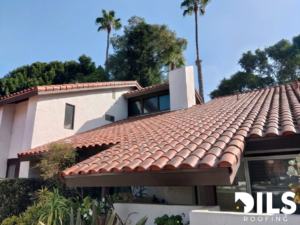
Tile is the top-performing roofing material for most coastal San Diego homes — and it’s no coincidence that it dominates the housing stock in communities like La Jolla and Carlsbad. Here’s why tile excels in coastal conditions:
- Naturally inert — tile doesn’t corrode, rust, or absorb salt the way metal or organic materials can
- Excellent UV resistance — tile holds up under year-round sun without cracking or degrading
- Long lifespan — concrete tile typically lasts 40–50 years; clay tile often exceeds that
- Low long-term maintenance on the tile surface itself
The main consideration with tile in coastal environments is the metal components of the system — flashing, fasteners, and gutters. Stainless steel or coated fasteners and galvanized or aluminum flashing hold up far better than standard steel in salt air environments. A knowledgeable roofer will spec these correctly for coastal installations.
One important note: tile roofs still require underlayment replacement every 20–25 years. The tiles themselves outlast the underlayment beneath them. Budget for this when planning a tile installation.
2. High-Grade Architectural Shingles
Standard asphalt shingles struggle more in coastal environments than tile does — salt air accelerates granule loss, and the marine layer moisture cycle wears on the mat beneath. However, premium architectural shingles from manufacturers like CertainTeed are a meaningful step up from standard 3-tab shingles.
High-grade architectural shingles offer:
- Thicker construction and heavier granule coverage that resists salt air degradation better
- Algae-resistant coatings that help in high-moisture coastal conditions
- Impact-resistant options rated for wind and debris exposure
- Lower upfront cost than tile, with a respectable lifespan of 25–30 years in coastal conditions when properly installed
If your HOA allows shingles and your budget favors them over tile, choose architectural shingles — not standard 3-tab. The quality difference in a coastal environment is significant.
3. Metal Roofing
Metal roofing can perform well in coastal environments, but material selection is critical. Standard steel roofing without proper coating will corrode in salt air. For coastal San Diego homes, the right metal options are:
- Galvalume or galvanized steel with a high-quality coating system designed for coastal exposure
- Aluminum — naturally rust-resistant and a solid choice in salt air environments
- Copper — extremely durable and corrosion-resistant, though typically used for accents and specialty applications rather than full roof coverage
Metal roofing offers excellent longevity when the right alloy and coating are used. It’s a strong option for flat or low-slope applications and contemporary architectural styles. It’s less common in traditional San Diego residential neighborhoods, and HOA restrictions may apply.
4. What to Avoid on Coastal Homes
Some roofing materials that work fine inland face real challenges near the coast:
| ✕ | Standard 3-tab asphalt shingles. Thinner construction and lighter granule coverage make them more vulnerable to the salt air and moisture cycle on the coast. They’ll typically underperform relative to their rated lifespan in these conditions. |
| ✕ | Uncoated or bare steel roofing. Without the right coating system, bare steel corrodes quickly in salt air. This applies to roofing panels, flashing, and fasteners alike. Always confirm the corrosion rating of any metal used near the coast. |
| ✕ | Wood shake. Wood roofing is highly susceptible to moisture damage, algae, and mold — all of which are accelerated in coastal humidity. It’s rarely the right call for a San Diego coastal home, and many fire-hazard regulations in the region restrict or prohibit it outright. |
Coastal Roofing Is About the Whole System, Not Just the Surface
The surface material gets most of the attention, but coastal roofing performance depends on the entire system. Two roofs with identical tile can perform very differently depending on what’s underneath and how it’s detailed at the edges.
For coastal San Diego homes, pay attention to:
- Underlayment quality. Synthetic underlayment performs better than felt in high-moisture environments. It resists moisture absorption and lasts longer under tile in coastal conditions.
- Flashing material and spec. All flashing, valley metal, and drip edge should be specified for coastal exposure — aluminum, galvanized, or stainless steel depending on application. Standard steel flashing rusts quickly in salt air.
- Fastener type. Stainless steel or hot-dipped galvanized fasteners are the right choice for coastal installations. Standard zinc-coated fasteners corrode faster than most homeowners realize.
- Ventilation. Proper attic ventilation reduces heat and moisture buildup beneath the roof deck — extending the life of both the underlayment and the decking below it.
If you’re comparing bids for a coastal roof replacement, ask each contractor specifically about their material specs for these system components. A contractor who defaults to standard inland specs without adjusting for coastal conditions may be setting you up for premature failures.
For a broader look at how tile and shingles compare across all San Diego homes, see our guide to tile roof vs. shingle roof in San Diego.
Frequently Asked Questions
What is the best roofing material for a coastal San Diego home?
Concrete or clay tile is generally the best roofing material for coastal San Diego homes. Tile resists UV degradation and salt air corrosion better than asphalt shingles, and its long lifespan makes it a strong long-term value despite the higher upfront cost. For homeowners where tile isn’t feasible, premium architectural shingles are the next best option — standard 3-tab shingles are not recommended for coastal environments.
Does salt air really damage roofs faster?
Yes. Salt particles carried in ocean air are corrosive to metal components — including flashing, fasteners, and gutters. This accelerates rust and oxidation in ways that are meaningfully faster than what inland homes experience. The roofing surface material matters, but so do the metal components throughout the system. Coastal roofing installations should specify corrosion-resistant metals for all exposed metal elements.
How close to the ocean does a home need to be for salt air to be a concern?
As a general rule, homes within about one to two miles of the coastline face the most significant salt air exposure. That said, prevailing winds and local geography can push marine air further inland in some areas. If you’re in a coastal community like Oceanside, Carlsbad, La Jolla, or Del Mar, it’s worth discussing coastal-specific material specs with your roofer regardless of your exact distance from the water.
Are metal roofs a good choice for coastal San Diego homes?
Metal roofing can work well on coastal homes, but the alloy and coating system must be appropriate for salt air exposure. Aluminum and properly coated galvalume steel are solid choices. Uncoated or standard-grade steel is not recommended near the coast. Always ask a metal roofing contractor specifically what their coastal corrosion rating is before committing to a system.
Do I need to do anything special to maintain a roof in a coastal area?
Yes. Coastal homes benefit from more frequent roof inspections — ideally annually rather than every few years. Salt buildup on tile surfaces can be rinsed periodically to reduce long-term surface wear. More importantly, flashing and fasteners should be inspected regularly for early signs of corrosion, since catching rust early is far less expensive than replacing failed flashing after water intrusion has occurred. An experienced Oceanside roofing contractor familiar with coastal conditions can help you set up a maintenance schedule that makes sense for your home.
Serving All of San Diego County
Dils Roofing & Solar proudly serves homeowners and businesses throughout San Diego County — from the coast to the inland communities. Find your area below to learn more about our local roofing services.
Roofing Built for the Coast
Dils Roofing & Solar has been installing and maintaining roofs in coastal San Diego communities since 1982. We know what materials hold up near the water, how to spec a system that resists salt air corrosion, and what to look for when a coastal roof starts to show wear. Family-owned, four generations, CSLB #639961.